

The Kipsigis community is increasingly uneasy about the economic conditions prevailing in their counties.
What many residents are experiencing is not merely slow growth but a worrying sense of economic stagnation — a reality that remains poorly understood by the public and inadequately explained or addressed by political leaders.
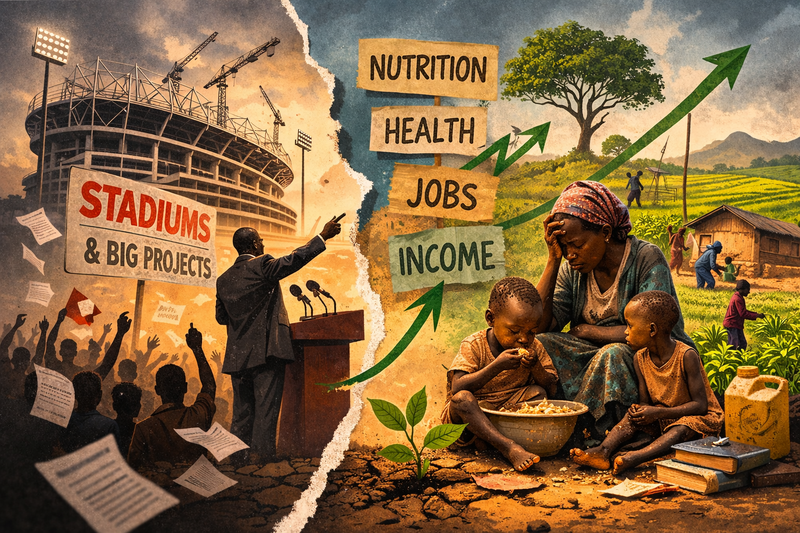
Public debate has increasingly shifted toward complaints that other counties are receiving high-profile projects such as stadiums and large infrastructure developments.
Yet in focusing on these visible symbols of progress, we risk overlooking a fundamental truth: economic development is not defined by landmark projects alone.
True development must include human progress. Key indicators such as nutrition, health, income security and opportunities for productive livelihoods remain deeply troubling in several parts of the region.
Instead of confronting the urgent question of how to structurally transform and diversify local economies with the clear goal of eradicating poverty, many leaders have joined the chorus demanding prestige projects. Infrastructure has its place in development, but it must serve a broader economic purpose.
A simple but uncomfortable question therefore arises: what value does a stadium bring to a malnourished child in Bomet County, where malnutrition levels are estimated at about 22 percent?
The paradox becomes even sharper at the sub-county level. In Chepalungu, the home area of the county’s first governor and where he served for a decade as Member of Parliament , malnutrition rates remain among the highest.
It is followed closely by Konoin, a region whose picturesque tea plantations often create the illusion of widespread prosperity.
Yet behind that image lies a more difficult reality. Many children in the area grow up surviving on “kaa ngumu,” a basic diet with limited nutritional value.
The lesson is clear: communities cannot outsource responsibility for their development to national leadership alone
. Ultimately, local progress depends heavily on the quality of leaders chosen at the county and constituency level. When voters repeatedly elect leaders who lack a clear vision for economic transformation, stagnation becomes the predictable outcome.
If meaningful development is to take root, the conversation must shift , from symbolic projects and political loyalty to serious economic thinking. Communities must demand leaders who understand how to build productive economies, diversify livelihoods and systematically tackle poverty and human development challenges.
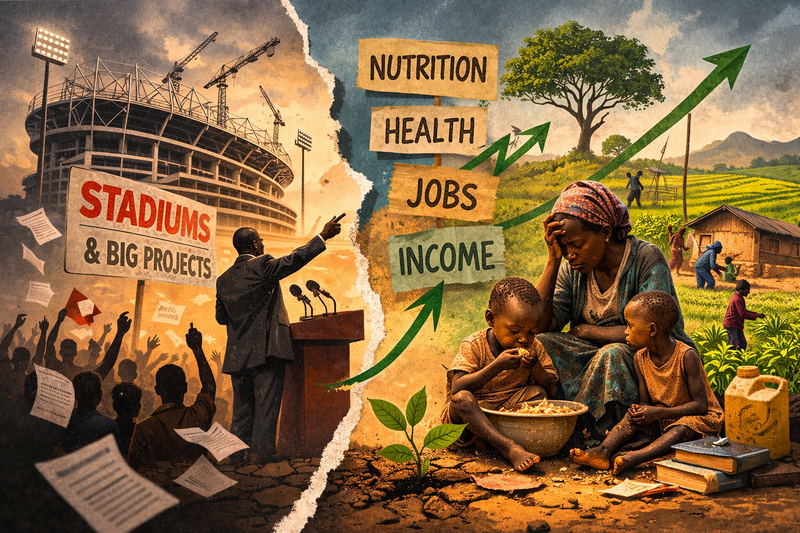
Only then can the cycle of stagnation be broken and replaced with a genuine pathway to prosperity.

Comments (0)
No comments yet. Be the first to comment!