

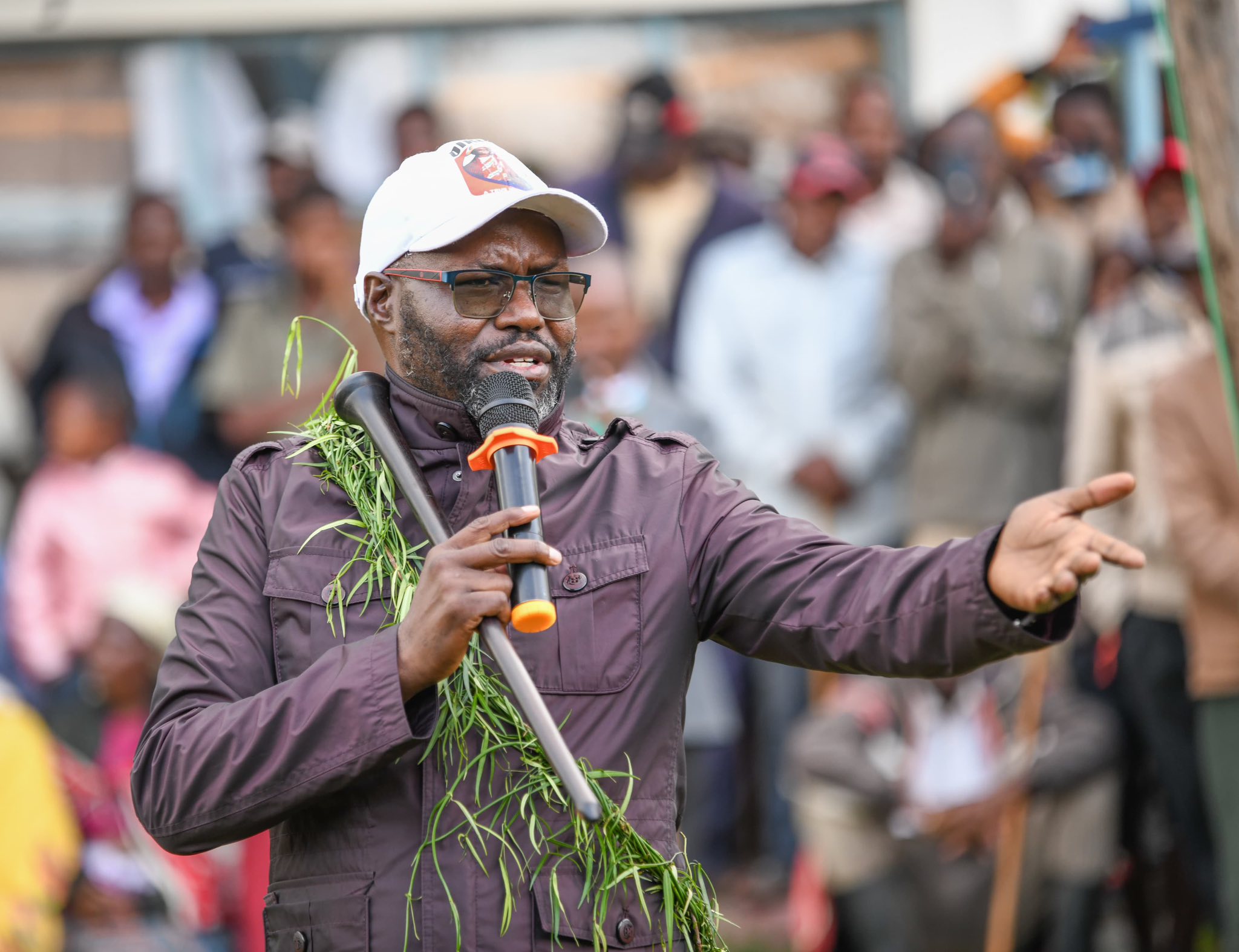
On a quiet Saturday afternoon, news of a helicopter crash in the hills of Nandi spread quickly across Kenya.
Within hours, grief swept through the Kipsigis community and far beyond. Among the six people who perished was Emurua Dikirr Member of Parliament Johana Ngong Ngeno, a man many believed carried not just the hopes of his constituents, but the living memory of their past.
He was 54.
To those who knew him well, Ngeno was never simply a politician. His life seemed to echo a story that began nearly two centuries earlier — a story of war, survival, land, and identity.
That story begins in the 1820s, during the Battle of Mogori, one of the darkest chapters in Kipsigis history.
The battle wiped out an entire age-set of warriors, leaving a community shaken and vulnerable. Out of that devastation rose an unlikely figure: Menya Araap Kisiara, a man who had once been an outcast but would grow into the most feared and respected war commander of the Kipsigis.
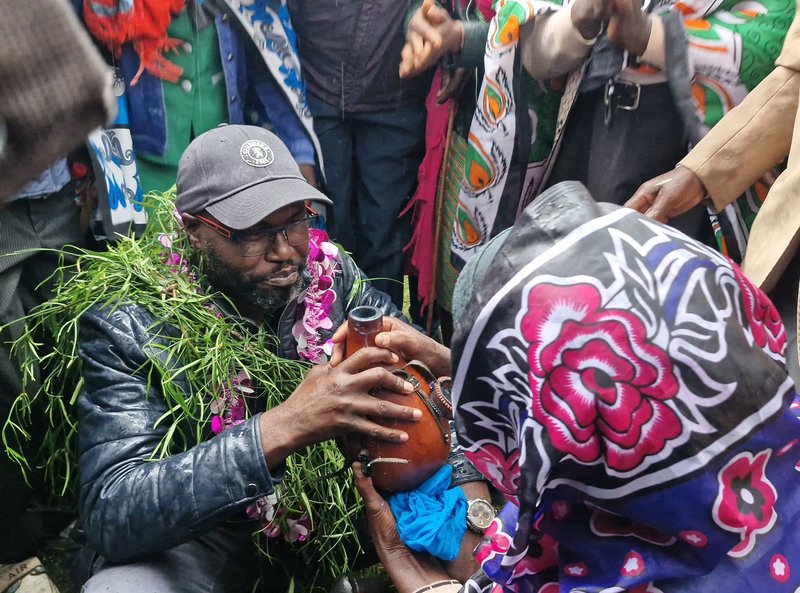
Menya led the defense of Kipsigis lands during a turbulent era of territorial conflict. Oral histories remember him not only for securing territory in Transmara but also for a moment of profound defiance in 1886 at Olalui, when he reportedly drew his sword to protest the erosion of Kipsigis traditions.
More than a century later, that legacy would find a new expression in his descendant, Johana Ngeno.
Where Menya carried a sword, Ngeno carried a voice.
Born in 1972, Ngeno grew up hearing the stories of his ancestors — stories that spoke not only of bravery, but of responsibility.
The battles of his time would not be fought on open fields but in courtrooms, policy debates, and the complex politics of land and development.
Education became his weapon.His academic journey took him far from the rolling hills of Kericho and Narok. In Ukraine, he pursued a Bachelor of Arts in International Law at Kyiv TSN University, immersing himself in global legal traditions. Later, he returned home to earn a Master’s degree in International Studies from the University of Nairobi.
Friends say he often spoke about the importance of understanding the world beyond Kenya in order to defend local communities within it.

In 2025, he fulfilled a lifelong ambition when he was admitted as an Advocate of the High Court of Kenya — a milestone that symbolized his belief that justice could be another form of resistance.
But long before that, his community had already chosen him as their champion.
In 2013, the people of Emurua Dikirr sent him to Parliament. For more than a decade, he served as a vocal advocate for rural development and housing. His colleagues in the National Assembly knew him as a passionate debater and an unrelenting defender of his constituency’s interests.
He later chaired the parliamentary committee overseeing the Affordable Housing programme, pushing for policies that could bring tangible change to ordinary Kenyans.
Yet politics alone never defined him.Away from the parliamentary chamber, Ngeno nurtured another passion — culture.
Concerned that modern influences were eroding traditional identity, he founded the Kalenjin Music Awards, a platform designed to celebrate and preserve local music. Under his leadership, the awards became a major cultural event, giving regional artists visibility and opportunity.
Just months before his death, he stood on a stage in Eldoret during the awards’ third edition, applauding musicians and celebrating what he called “the sound of our people.”
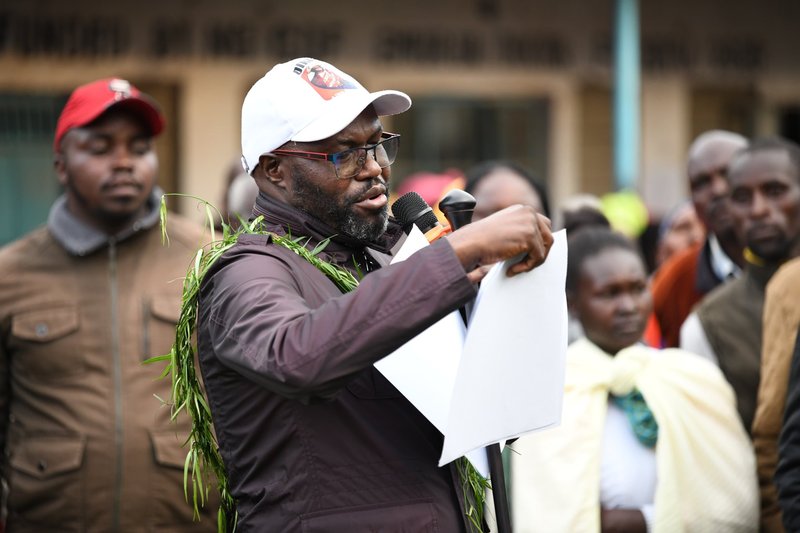
But perhaps the moment that most captured Ngeno’s character came in April 2025, during the violent land disputes in Angata Barrikoi that left six people dead.
In widely shared footage, the MP could be seen standing before heavily armed police officers. In his hand was a traditional rungu, a symbol of authority and defense in Kalenjin culture.
For many watching, the image felt almost symbolic — as if history itself had resurfaced. Here was a descendant of Menya Araap Kisiara, standing on contested land and confronting power, much as his ancestor had done more than 140 years earlier.
Those who knew him say he never sought confrontation, but he believed deeply that leaders must stand where their people stand — especially in moments of crisis.
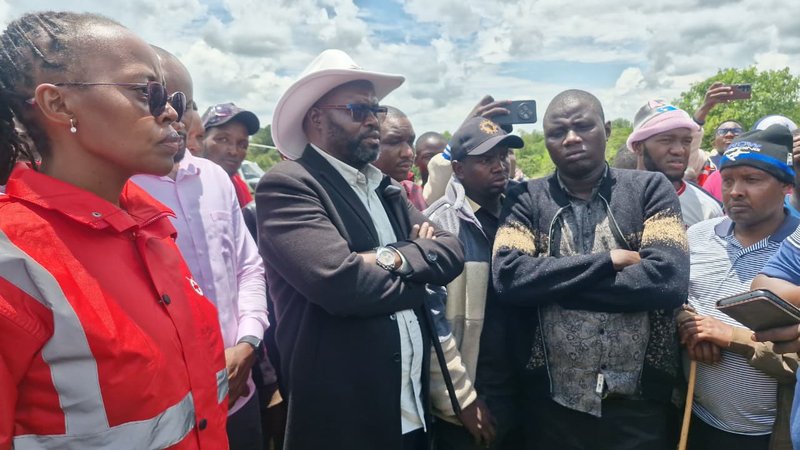
Even in his final hours, that instinct remained unchanged. On the morning of February 28, 2026, Ngeno was at Mara Rianta, standing with grieving families searching for two young men who had been swept away by floodwaters. Witnesses remember him offering words of comfort and promising support.
Later that day, he traveled to Trans Nzoia County to attend the 35th anniversary celebration of musician Kim Kim, where he was seen laughing, dancing, and mingling easily with the crowd — the kind of public warmth that had endeared him to many.
By mid-afternoon, he was airborne again. At around 4:30 p.m., the helicopter carrying Ngeno and five others attempted an emergency landing in Mosop, Nandi County. The aircraft crashed and burst into flames. None of the passengers survived.
For the Kipsigis community, the loss feels larger than a single life. It is the closing of a chapter in a story that stretches across generations — from the warriors who defended their lands with spears and swords to a modern leader who fought with words, law, and culture.
At Angata Barrikoi, the Mogoiwet tree still stands, its branches stretching quietly over land that has witnessed centuries of struggle.
Some say it has seen the beginning and the end of a 200-year journey. And somewhere in that long story now rests the voice of Johana Ngeno.



Comments (0)
No comments yet. Be the first to comment!